|
|
Rickenbacker 12 Strings
To many people, the only instantly identifiable tone of a 12 String comes from a Rickenbacker Electric 12 String. Specifically, it's the tone unique to the original guitars and recordings of the '60s that many guitarists want. Tone is an elusive quality. An ear often fools us on first impressions then later under closer scrutiny we recognize differences, especially concerning the gear we use now and the gear used then. If you are using a popular V Series Rickenbacker, you are fundamentally producing a different sound compared to vintage Rickenbackers from the '60s and up to about 1973. I suggest the first three differences discussed below are absolute tone fundamentals in combination with the preferred amp setup used with these guitars and a good compressor. Since the introduction of the 'C' Series, Rickenbacker has addressed many of the above differences in these models, with the exception of supplying stock standard Flatwound nickel strings, supplying a wider cut nut, and using Alnico magnets. The fretboards of the 360 C series while standardized are closer to approaching the typical radius of the vintage '60s guitars at 7.25". For independent insights on this subject, from players and professional luthiers alike, I highly recommend joining the private discussion forum TheBeatGearCavern . I could not provide the wealth of information alone that this forum provides. Here's a list of the major differences: 1.
7.4 ohm pickup windings in vintage
Rick 12 toaster pickups compared to Hi-Gain toaster pickups wound to 12++ ohm
on the V Series. 2.
Flatwound nickel strings were
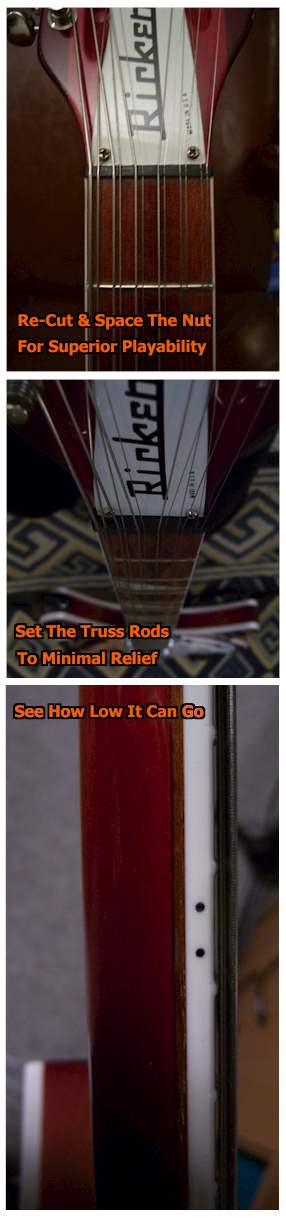
stock on vintage Rickenbackers. The guitars were set up to accommodate them,
meaning the nuts, and saddles were set up to accommodate them from the
factory. The modern compressed roundwound stock string from Rickenbacker is not
the same string or tone. 3.
.0047 capacitors were used across
all switch positions in vintage Ricks. Sometime in the early '90s, the .0047
capacitor was removed from the bridge position switch. 4.
The wiring harness in vintage
Ricks used 250K volume pots, 500K tone and mixer pots. In the V Series 250K
pots were used in the tone and mixer controls. In current standard models,
they now use 330K pots in tone and volume, and a 500K mixer pot. 5.
Alnico magnets were used in
vintage toaster pickups. 6.
Inconsistent fretboard radius' in
vintage Rick 12s compared to the standard 10" radius used in V Series.
|